House of the Dead
2003

This was the official website of the 2003 horror film, House of the Dead.
Content is from the site's archived pages and other relevant outside sources.
House Of The Dead - Trailer
It's spring break and these college kids just want to party. When they charter a boat to take them to a rave on a nearby island, they find it completely deserted, except for the bloodthirsty zombies that have taken it over. A frantic search begins for weapons to use against the encroaching killers because, as nighttime falls, they realize that their only hope for survival is to win the final battle...in the HOUSE OF THE DEAD.
Address: Uwe Boll.
Countries: Canada, USA and Germany.
Year: 2003.
Duration: 90 min.
Interpretation: Ona Grauer (Alicia), Jonathan Cherry (Rudy), Tyron Leitso (Simon), Enuka Okuma (Karma), Jürgen Prochnow (Kirk), Will Sanderson (Greg), Ellie Cornell (Casper), Sonya Salomaa (Cynthia) Clint Howard (Salish), Kira Clavell (Liberty).
Screenplay: Mark A. Altman and Dave Parker; based on the video game.
Production: Uwe Boll, Shaw Williamson and Wolfgang Herold.
Music: Reinhard Besser.
Photography:Mathias Neumann.
Editing: David M. Richardson.
Production design: Tink.
Artistic Direction: Peter Stratford.
Costume: Lorraine Carson.
Premiere in USA: 10 October 2003.
Premiere in Spain: 7 May 2004.
House of the Dead is a 2003 German-Canadian-American zombie film, and the adaptation of the 1996 light gun arcade game of the same name produced by Sega. The film was directed by Uwe Boll and is a critical and commercial failure.
The film was panned by critics. On Rotten Tomatoes the film was ranked as the 41st of the 100 worst reviewed films of the 2000s, with an approval rating of 3% based on 59 reviews.
Let me set the scene: It was a dark and stormy night (how fitting), and I'd just finished a 12-hour shift dealing with the aftermath of a Google penalty on my website. Exhausted and frustrated, I thought, "Hey, why not unwind with a zombie flick?" Little did I know, I was about to experience something far worse than any search engine algorithm update. Unlike Google penalties, which help maintain the quality of search results, this film has absolutely no redeeming qualities. The plot, if you can call it that, is a jumbled mess of clichés and nonsensical decisions. The characters are so poorly developed that I found myself rooting for the zombies. And don't even get me started on the dialogue – it's as if the script was written by a malfunctioning AI that had been fed nothing but B-movie tropes and energy drink slogans1. The direction by Uwe Boll is laughably bad, with jarring cuts and inexplicable slow-motion sequences that serve no purpose other than to pad the runtime. And in a move that can only be described as cinematic sacrilege, they actually inserted footage from the video game into the movie. It's like they're desperately reminding us, "Hey, remember? This is based on a game!" as if that excuses the atrocity unfolding on screen1. Now, I will say this: the makeup team must have had a blast. In fact, they seem to be the only ones who took their job seriously. The zombie effects, while not groundbreaking, are decently gruesome. It's a shame their hard work is lost in a sea of incompetence2. As the credits rolled, I found myself longing for the relative pleasure of dealing with SEO issues. At least those have solutions. The only solution for "House of the Dead" would be to bury every copy in a deep, dark hole and pretend it never existed. In conclusion, if you value your time, your sanity, or your love for the horror genre, stay far, far away from this movie. I'd rather face a horde of real zombies than sit through this disaster again. The only thing scary about "House of the Dead" is how it ever got made in the first place. [Peter Grykein]
 REVIEW ½*
CRITICAL by Joaquín R. Fernández
Uwe Bollis a filmmaker who during the next few years has proposed to bring to the big screen a series of video games that, in general, except "Alone in the dark", can not be said to be true references in this form of leisure that even now generates more dividends than the film industry itself. The director of "House of the dead" does not seem interested in the arguments of the material whose rights have acquired, among other things because they are extremely simple and practically nonexistent.
As the script is unbearable and the story is not supported by any side, Uwe Boll chooses to shoot a very fast introduction in which, to attract the attention of the adolescents whom he intends to em-dance with his tape, is dedicated to show us a few female nudes that, so gratuitously, almost cause laughter by the impudence with which they are raised. The one who likes horror movies will be completely disgusted after seeing this movie, for all he will find is gunfire and a good number of viscera and blood, but not claustrophobic and oppressive environments. On the contrary, zombies are visible at all times while the protagonists of "history"
Of course, Matrix effects and continuous references to the game are not missing anytime, becoming Uwe Boll in a kind of Gus Van Sant, although this time replace the cows of that one by fleeting images of the title of Sega . To-do it configures a delirious product that does not cause fear, but an annoying feeling that we are taking the foot and that the only truly remarkable feature of the film is found in the work of the makeup department, which really seems to have taken its work seriously. The future director of "BloodRayne" does not show any talent in the multiple planes that we can find in the film; on the contrary, rather it seems to roll everything without planning, in the purest style of a production of series B, except in those scenes in which the most modern special effects have been used. The sets are crappy and appear actually filthy. My dad who runs a janitorial supplies business watched it with us. He loves horror, and nothing grosses him out, yet he wanted to send the producers some free samples. "Gross is grosser if it's actually dirty!"
The cast is terribly frightening, a handful of young performers who do not even deserve to be called actors , although it is true that no one has the opportunity to show off a script in which they create dialogues that are constructed with short phrases and where there is no development of the characters (hence Jürgen Prochnow shows in his face a brazen apathy or that in the original version of the film nor bother to correctly pronounce in Spanish "Island of Death", making it rather as if he were speaking in Portuguese). With respect to the soundtrack, it presents some decent moments and much higher than what we see on the screen (the camera overlapping the sea and directing his gaze towards the island or the later moments when the protagonists take refuge in the house seeing that they can not flee by boat, crowded with the living dead). However, the horrifying use of disco rhythms destroys these minimal hits and bring us back to reality:
The Cinemaphile Blog
House of the Dead / zero stars (2003)

The utterly dreadful “House of the Dead” wages war against the enthusiasm of moviegoers by asking a dangerous key question: can filmmakers be as stupid and irresponsible as the characters they exploit? Five minutes into the picture and I felt my inner child weeping for the future of the industry. That’s not to say this is an endeavor made with dubious intentions; on the contrary, I’m positive everyone involved legitimately thought they were participating in something amusing, at least on a professional level. But that makes their associations all the more damning when one contemplates them in the context of the final result, a film so inept that one can only gaze on it with relentless confusion. What possessed the director, Uwe Boll, to orchestrate his maddening opus with the hands of a clueless lunatic? What nerve did these writers (if you dare call them that) have in pitching a screenplay that most college students would be embarrassed to submit as a first draft assignment? And what of the designers of the game it is based on, who will no doubt look on at these images and find themselves inflamed with outrage that their source will now forever be disparaged by this stain of an incompetent adaptation?
To describe what a viewer may witness in these 90 minutes is to imagine what it must be like to suffer brain trauma – some moments have the resonance of vapor, others inspire pain, and an even greater few suggest as many frustrating gazes as they do hopeless questions. Unlike video games, however, the film never bothers to set basic ground rules, other than perhaps the vague connotation that audiences have plucked their own from a catalogue of more reputable sources about zombies and undead attackers. But even that falls into question with the simplest impulses, and there is a sense as you watch the scenes that they have been filmed in no order, without cogent setups or with any of the actors knowing their lines before cameras start rolling. There is a moment in the first hour so bad that it emphasizes the overreaching laziness of all those involved. A woman is swimming off the shore of an island, her boyfriend is nearly passed out on the beach, and the camera pans under her dangling legs while the soundtrack thuds ominously, suggesting a reenactment of the famous opening sequence of “Jaws.” Instead, no attack comes; she turns back to the beach to find her man missing, and there is nothing further said of his disappearance.

What follows (and precedes, for that matter) is a series of disjointed, badly shot and poorly conceived scenes that have no artistic value and offer no sense of perspective, unless you’re the sort of person who thrives on supposed professionals making total fools of themselves. The story is a slapdash retread of nearly every dead teenager cliché of the past thirty years: five rowdy youngsters show up to the edge of a pier to take a boat out to a nearby island, where an apparent rave is currently underway, and discover their boat has left without them. A shoddy narration from an unknown source overlays their arrival: “If only they stayed in Seattle, they’d be alive today.” The words are then echoed by the puzzling gazes of Salish (Clint Howard), a longshoreman with eccentric behavior patterns who warns that the island is “cursed,” although not enough to inspire his mysterious boss Kirk (Jurgen Prochnow) to transport them out there anyway. Meanwhile, the movie hints at a subplot with the inclusion of a police officer named Casper (Ellie Cornell), who believes Kirk is smuggling something on his boat and pursues him just as events on the island begin to run amok.
But when the five arrive, they do not discover a rousing party atmosphere, as early establishing shots suggest; the rave has already been disbanded and all the participants have either gone missing or shown up dead, usually in a literal sense as bloodthirsty corpses. The source: a rather old looking church-like structure at the center of a clearing, said to contain the spirits of early settlers who have turned the island into a death trap for anyone who wanders within. The bigger crime is asking the audience to believe any of this is scary or plausible; the first time the “undead” creatures are visible during an early attack, in fact, their appearances are so badly conceptualized that it’s as if someone glued dryer lint to the faces of the actors and gave them Christmas lights to simulate their red eyes. Those are simply a launch point of an endless arsenal of offenses, however. The makeup of the actual zombies is amateurish at best. The villain, who looks like a device from the Rob Zombie discard pile, has no presence beyond the absurdity of his scowl. And when the inevitable survivors turn the initial attack around into nonsensical shootouts after long chases, the damaged heads of the deceased look less like works of movie magic and more like exploding watermelons full of spaghettios. And don’t even get me started on the film’s lazy use of blood, which looks less like the actual substance and more like someone spilling red Kool-Aid on the nearby rug.
I could regard this all with easy dismissal, mind you, had Boll not had the audacity to transition between scenes using footage from the actual video game. The very idea is ridiculous – certainly moreso than the terrible point-of-view sequence used in the “Doom” film – but nothing could have prepared me for the blatant visualization of something so ugly and revolting. While I certainly don’t pretend to be an expert in the field, I do know my timelines; because the game came out in 1997, that means the technology was far too primitive for it to be rendered on a movie screen in suitable resolution. Ergo, Boll’s shameless edits have all the finesse of a jarring blob sticking out between shots of actors running in different directions. What was his motivation? In my limited research, I could only cite one justification: the footage exists to pay homage to the source. Apparently no one ever bothered telling him that true dedications ought to come in the form of passable entertainment, not mere seconds of an old game that is probably far more amusing to sit through.
“House of the Dead” is an ugly, endless, moronic waste of film stock. I loathed every pathetic second of it. Will it endure in some circles, though, just as some of the most notorious bad films of all time have? It’s hard to see how. The movie is too shoddy to function as an absurdist’s wet dream. At a certain point the mistakes become so glaring that they no longer inspire anger or resentment – only mere boredom. And the ending is such an inconclusive mess that there is no incentive to heave a sigh of relief at the prospect of any ending: we become too distraught by the underlying motives of the story, which has the arrogance to assume anyone would be interested in a sequel. And indeed, one does exist, somewhere, in the bowels of a cinematic cesspit I hope never to venture. And if it remains true that follow-ups are generally far inferior to their predecessors, imagine what kind of punishment that would insist on those clueless enough to keep going.

TOMATOMETER
CRITICS 3% | AUDIENCE 9%
Don't come looking for a story -- this is a hunt.
January 8, 2007
Chicago Reader
Top Critic
A derivative shock-horror exercise desperately in need of an IV.
Takes out a moviegoer's limbic brain and cerebral cortex. All that's left functioning is the reptilian brain, droning: Kill The Things. Kill The Things...
To properly convey the jaw-dropping shoddiness of this videogame-based 'horror' 'movie,' one must approach what scientists call Absolute Stupid.
Here is yet another video game transferred to film with little enhancement or development.
AUDIENCE REVIEWS

½ Brett B
June 15, 2017
I love horror movies. I love video games. I DON'T like both at the same time! In other words, this movie is the worst I've ever seen in my life, and the video game/live action transitions did not make this movie any better. Your best bet is to just stick to the video game and leave this movie on the shelves.
+++
½ Power M
May 31, 2017
The first time I saw this movie was on the Syfy Channel and I thought to myself damn that was pretty shitty got a SyFy oginal and then to find out it was a multimillion dollar film that made SyFy oginals look good
+++
½ Adam B
April 5, 2017
Why does this movie even exist?
+++

** Marcus M
February 3, 2017
Most movies based off videogames are not good. In fact they're pretty much downright garbage. Which brings us to "House of the Dead" a 2003 Uwe Boll film adaptation of the popular arcade rail shooter. Some might have 2 questions.
1. who's Uwe Boll? 2. What's a rail shooter?
Uwe Boll is a director synonymous with straight to DVD B movie horror/action ; with the "Rampage" trilogy, "In the Name of the King 3", and "Bloodrayne" 2 and 3. I don't know if "House of the Dead" got a theater release ,but if so I'm sure it was short lived.
As for rail shooters. They're your typical arcade shooting games house of the dead, area 51, metal slug. They're games were you're rout is predetermined, most of them move the character for you,you just aim and shoot. There's little dialogue and the plot is simplistic and usually explained in 2 or 3 brief cutscenes. They're still awesome games, but how do you expand on that to make a 90 minute movie? Well after watching "House of the Dead" I can tell you this movie is clearly not the answer.
Our main characters consist of two douchey college guys, three hot girls( tough black girl,dumb blonde, and smart brunette), a kermudgenly German boat captain smuggling weapons, a coast guard badass chick, and Clint Howard as the first mate. That's a bad sign when you have a main party of seven actors nobody knows and Clint Howard is the most famous person in this film.
Our group is on their way to the rave of the year which is being held on Isle de Muerte. Despite missing the ferry to the island and the German captains warning, they pay him to take them anyway. They show up to the island of death and find the rave completely deserted and wrecked( they even find a shirt covered in blood); but think nothing of it and pour themselves some beers and try to hookup.
Zombies inevitably show up and our troop of morons start running through the woods. The blonde girl gets zombified, and her stupid boyfriend then gets eaten. They run into another group of survivors who were at the rave earlier; including my favorite character ,Liberty(an Asian raver girl in a united States flag jumpsuit who kills zombies with knives and roundhouse kicks).
Kirk the German captain shows up to reveal he was smuggling weapons and all hell breaks loose as we get a bad zombie shoot em up; with shitty editing, and horrible techno music throughout. It's so generic that they keep splicing in footage from the "House of the Dead" videogame;like they have to keep reminding you that the movie is based on the game.
There's a Ludacris shoot out scene with a really bad P.O.D sounding song that goes on way too long. Characters and zombies start dieing left and right. There's still not much revealed about the plot. In fact we're not introduced to the villian until an hour and fifteen minutes into a hot and a half movie.
The villian is an evil scientist who's been doing experiments for centuries and has made an immortality serum( Original :/ ). He's doing some weird stuff to make a perfect being,not really sure; even the short exposition is vague. He bites the dust in a death so ridiculous I won't ruin it if you decide to watch this movie. The movie ends in a cliffhanger thinking there will be a sequel, and guess what? They made "House of the Dead 2".
So as far as bad videogame movies go House of the Dead is upper echelon trash. Is it worth a watch? With enough of your friends to rip on it, it's definitely worth a view. It's by no means good, but it's so stupid and poorly done it's funny.
+++
½ Spencer H
December 24, 2016
A laughably horrible movie.
+++
* Arun G
November 12, 2016
This flick is so bad its actually *beep* entertaining. Lots of unintentional humor.
+++
Leonard D
August 24, 2016
Liked the video game, don't bother me with this box office sodomy!
+++
* Danny G
May 21, 2016
One question: was this movie intentionally suppose to be funny? I gave it a star for some of the chuckles I had. Other than that it's a rather juvenile, ill conceived POS that's nothing but a complete waste of time. Drek. Some might argue "why a full star?" Well you might say the breast fu had something to do with it :)
+++
* Andreas C
May 15, 2016
It's not fair to write a review for this in my case. Who knows, maybe it got interesting after I fell asleep out of boredom!
+++
½* Alec S
February 29, 2016
save your time and avoid this like the plague
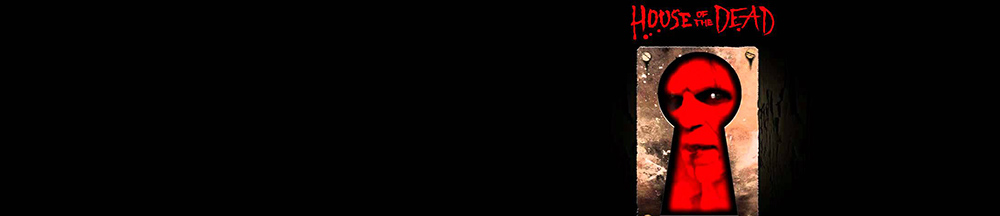
More Background On HouseOfTheDeadMovie.com
HouseOfTheDeadMovie.com served as the official promotional website for the 2003 horror film House of the Dead, a motion picture based on Sega's immensely popular arcade zombie shooter franchise. During the early 2000s, when dedicated movie websites were an essential part of film marketing, the site functioned as the central online destination where fans could watch trailers, browse production information, download promotional materials, learn about the cast, and immerse themselves in the film's dark atmosphere before its theatrical release.
Although the film itself became notorious for its overwhelmingly negative critical reception, the website represents an interesting snapshot of an era when studios invested heavily in standalone promotional websites rather than relying primarily on social media. Today, archived versions of HouseOfTheDeadMovie.com preserve an important piece of early internet entertainment marketing history while documenting one of the most infamous video game adaptations ever produced.
The Origins of the House of the Dead Franchise
To understand the significance of HouseOfTheDeadMovie.com, it is necessary to first understand the popularity of the property it was promoting.
Sega introduced The House of the Dead as an arcade light-gun shooter in 1996. Players assumed the role of government agents investigating a mysterious mansion filled with horrific creatures created through biological experimentation. The game quickly distinguished itself from competing arcade shooters through its cinematic presentation, branching pathways, memorable boss battles, and extensive use of zombies and other monsters.
The franchise expanded rapidly with sequels, home console ports, and spin-off titles. By the early 2000s, The House of the Dead had become one of Sega's best-known arcade properties and enjoyed a substantial international fan base. The game's popularity made it an attractive candidate for Hollywood adaptation during a period when studios were aggressively pursuing film rights to successful video game franchises.
Bringing the Game to the Big Screen
The film adaptation was directed by German filmmaker Uwe Boll, whose career would later become closely associated with video game adaptations. The screenplay was credited primarily to Mark A. Altman and Dave Parker, while producer Wolfgang Herold worked alongside Boll and Shaw Williamson.
Unlike the game's storyline, the movie created an original narrative centered on a group of college students traveling to a remote island to attend a rave. Upon arrival, they discover the island has become overrun by zombies, forcing the survivors into a desperate battle for survival.
Principal cast members included:
- Jonathan Cherry as Rudy
- Tyron Leitso as Simon
- Ona Grauer as Alicia
- Enuka Okuma as Karma
- Will Sanderson as Greg
- Jürgen Prochnow as Captain Kirk
- Clint Howard as Salish
- Ellie Cornell as Casper
- Kira Clavell as Liberty
The production represented an international collaboration involving Canadian, German, and American companies, reflecting the increasingly global nature of independent genre filmmaking during the early 2000s. The film carried an estimated production budget of approximately $12 million and premiered in North America on October 10, 2003.
The Purpose of HouseOfTheDeadMovie.com
Like many official movie websites of its era, HouseOfTheDeadMovie.com functioned as a comprehensive promotional hub.
Rather than merely advertising theatrical release dates, the website sought to immerse visitors in the world of the film through multimedia content. At a time when broadband internet was becoming increasingly common but streaming platforms did not yet exist, official movie websites served as destinations where fans could repeatedly return while anticipating a film's release.
Visitors typically found information including:
- official trailers
- production stills
- cast biographies
- character descriptions
- storyline summaries
- downloadable wallpapers
- promotional artwork
- release information
- production credits
The site was designed to generate excitement among both horror fans and existing players of Sega's arcade games. The overall presentation embraced dark imagery, horror aesthetics, and action-oriented graphics consistent with the film's marketing campaign.
Design Reflecting Early 2000s Movie Marketing
HouseOfTheDeadMovie.com reflected many design conventions common to entertainment websites during the early broadband era.
Flash animation was widely used throughout movie marketing websites of the period, allowing dramatic animated introductions, cinematic transitions, sound effects, and interactive menus. Visitors often entered through elaborate splash pages before navigating into sections devoted to trailers, downloads, production notes, and cast information.
The visual style emphasized:
- dark color palettes
- blood-red typography
- distressed textures
- atmospheric imagery
- cinematic backgrounds
- horror-themed navigation elements
Rather than focusing on usability in the modern sense, websites like HouseOfTheDeadMovie.com prioritized mood and immersion. The goal was to recreate the feeling of entering the movie's world long before audiences purchased tickets.
Because the internet was still evolving into a multimedia platform, these official websites frequently became collectible experiences in their own right. Many fans revisited them repeatedly for new downloadable content or updated promotional materials.
Website Navigation and Content
Archived versions indicate that HouseOfTheDeadMovie.com organized its information similarly to many studio-sponsored film websites of the era.
Common sections included production information introducing visitors to the filmmakers, story summaries explaining the basic premise without revealing major plot twists, and cast pages highlighting principal actors and their characters.
Trailer pages allowed users to stream or download promotional videos, while gallery sections featured production stills and marketing photography.
The site also emphasized release information and promotional artwork designed for theatrical advertising.
Unlike today's movie websites that primarily redirect visitors toward streaming services or social media channels, HouseOfTheDeadMovie.com functioned as a self-contained experience where nearly every aspect of the marketing campaign could be explored from a single destination.
Production Locations and the Island Setting
Although the story is framed around a dangerous island associated with the Spanish name “Isla del Morte,” the movie was primarily filmed in British Columbia, Canada. Coastal scenery, wooded terrain, beaches, and isolated structures around the Vancouver region provided the appropriately remote setting required for the film. The Pacific Northwest landscape helped the production create the impression that the characters had traveled far beyond the reach of ordinary emergency services.
Much of the movie’s identity depends on this geographic isolation. The young travelers cannot simply drive away, call for help, or retreat to a populated area. Their dependence on a chartered boat establishes the island as a contained survival environment. Once transportation becomes unavailable, the beaches, forests, graveyard, abandoned rave site, and central house effectively become stages in an escalating video game.
For viewers interested in filming locations, the landscapes are also recognizable as part of the same Canadian production environment used by numerous American horror and science-fiction projects. Vancouver’s established film infrastructure, varied terrain, experienced crews, and proximity to water made the region a practical substitute for an unnamed island off the coast of Washington State.
A Story Built Around a Remote Island Rave
The movie begins with a group of young adults attempting to reach an island rave. After missing the principal transportation, they persuade Captain Victor Kirk to take them there aboard his boat. Kirk is accompanied by his eccentric assistant, Salish, who warns the passengers about the island’s sinister reputation.
The group includes Alicia, Rudy, Simon, Karma, Greg, and Cynthia. Their initial goal is uncomplicated: reach the party, drink, dance, and enjoy the weekend. This setup was clearly designed to attract the young horror audience familiar with slasher films, spring-break comedies, electronic music, and survival-action games.
When the travelers arrive, however, the rave has ended under mysterious and violent circumstances. Tents and equipment remain, but most of the attendees have disappeared. The newcomers eventually encounter survivors, including the acrobatic fighter Liberty, while learning that the island is overrun by reanimated corpses.
A Coast Guard officer named Casper also becomes involved. She has been pursuing Kirk because of his suspected smuggling activities, but the confrontation is overtaken by the far more urgent zombie attack. The discovery that Kirk has transported a cache of firearms transforms the surviving partygoers into an improvised assault team.
The movie then shifts from conventional horror into extended action sequences. Characters armed with pistols, shotguns, rifles, and bladed weapons fight their way through crowds of zombies while moving toward the mysterious house at the center of the island.
The Connection to Sega’s Video Game
The motion picture uses the title and general zombie premise of Sega’s franchise but does not closely reproduce the storyline of the original arcade game. The 1996 game follows agents Thomas Rogan and G as they investigate experiments conducted by Dr. Roy Curien at a mansion and laboratory complex. The movie instead introduces college students, a rave, smugglers, and a centuries-old villain.
The filmmakers attempted to maintain an obvious connection to the game through visual references, character names, point-of-view gunfire, and brief inserts of arcade footage. During transitions and combat scenes, images from the game appear directly on screen. These clips were intended to remind audiences that the movie was an adaptation and perhaps to recreate the rapid visual rhythm of arcade gameplay.
This became one of the film’s most discussed stylistic decisions. Critics generally found the insertions distracting because the low-resolution game graphics contrasted sharply with the live-action photography. Rather than making the film feel interactive, the transitions often interrupted continuity and called attention to the differences between the two media.
Nevertheless, these game inserts made House of the Dead distinctive. Even viewers who dislike the technique tend to remember it. The decision reflects a period when filmmakers were still experimenting with ways to translate video game mechanics into cinematic language. Later adaptations would use first-person perspectives, game-like interfaces, achievement graphics, and other devices, but House of the Dead adopted one of the most literal approaches by placing footage from the source game inside the movie.
The Extended Cemetery Battle
The movie’s best-known sequence is a long battle between the survivors and a large group of zombies outside the house. Each character is presented with weapons and given an individual action moment, often photographed in slow motion or with a camera circling around the performer.
The sequence combines rapid editing, rotating camera movements, electronic music, muzzle flashes, explosions, martial arts, and exaggerated gunplay. It owes a visible debt to late-1990s and early-2000s action films, particularly productions influenced by The Matrix. The characters frequently perform physically improbable maneuvers despite having no established military or combat training.
For some viewers, this scene is the point at which the movie abandons any attempt at conventional horror. The zombies no longer function primarily as frightening creatures emerging from darkness. Instead, they become targets in an extended live-action shooting gallery.
From a marketing perspective, however, the sequence supplied the trailer and official website with energetic material. Images of heavily armed young people battling crowds of zombies communicated action immediately, even to visitors unfamiliar with the plot. The scene also aligned the movie more closely with the fast-paced arcade experience than its dialogue-heavy opening sections did.
Critical Reception
Critical response to House of the Dead was exceptionally negative. Reviewers objected to its dialogue, character development, editing, acting, special effects, story structure, and limited fidelity to Sega’s games. Several prominent reviews treated it not merely as an unsuccessful horror film but as an example of the broader difficulty Hollywood faced when adapting interactive entertainment.
Rotten Tomatoes has long listed the film with an approval score of approximately three percent. Its critical consensus describes the production as disjointed and largely brainless while acknowledging that it contains substantial unintentional humor. Metacritic similarly reflects overwhelmingly unfavorable professional reviews.
The direct use of video game footage attracted particular criticism. Reviewers also questioned the logic of inexperienced partygoers suddenly handling powerful weapons with extraordinary skill. Others felt that the rave concept, techno soundtrack, slow-motion gunfights, and sexual content were superficial efforts to appeal to a young audience rather than elements serving a coherent story.
The dialogue became another frequent target. Exposition is often delivered abruptly, character motivations receive little development, and several lines have been repeatedly quoted in discussions of poorly written movies.
The film did not receive significant mainstream awards for artistic achievement. Its more enduring distinctions have generally come through retrospective lists of poorly reviewed films, unsuccessful video game adaptations, and notorious horror productions of the 2000s.
Box Office Performance and Popularity
Artisan Entertainment released House of the Dead in the United States on October 10, 2003. The timing positioned it as a horror option during the weeks leading into Halloween.
The movie opened in approximately 1,520 North American theaters and earned about $5.5 million during its opening weekend. Its domestic theatrical total eventually reached approximately $10.25 million. International receipts added roughly $3.57 million, producing a worldwide theatrical gross of about $13.82 million.
The reported production budget was approximately $12 million. On a simple comparison of box office revenue to production cost, the film earned slightly more worldwide than its stated budget. That does not mean it was profitable, however, because theaters retain part of ticket revenue, while distribution, prints, advertising, and other expenses are not included in the production figure.
Its financial performance was therefore modest rather than catastrophic. The movie attracted enough curiosity, genre interest, and name recognition to secure a wide release and an identifiable audience. It did not, however, become the major theatrical franchise starter its title and cliffhanger ending appeared to anticipate.
An Important Release for Artisan Entertainment
The film occupies an unusual place in corporate film history because it was among the final theatrical releases associated with Artisan Entertainment before the company became part of Lions Gate Entertainment.
Artisan had developed a reputation for distributing independent and genre films. Its greatest success came from The Blair Witch Project, which demonstrated the commercial potential of inexpensive horror supported by highly effective internet marketing. By 2003, however, the company was approaching the end of its existence as an independent distributor.
This makes HouseOfTheDeadMovie.com more than a promotional site for a single horror film. It is also a surviving artifact from the closing period of a recognizable independent film distributor and from an era when movie companies built separate websites around individual theatrical releases.
Audience Reaction and Cult Reputation
General audience scores were also very low, but the film gradually developed a secondary reputation among viewers who enjoy “so bad it’s good” entertainment. Its technical mistakes, exaggerated action, abrupt game inserts, techno soundtrack, and unusual dialogue make it suitable for group viewing, humorous commentary, and bad-movie events.
This form of popularity differs from ordinary critical or commercial success. Viewers may not consider the movie effective as horror, yet still find it memorable and entertaining because its choices are so excessive. Online discussions frequently recommend watching it with friends rather than approaching it as a serious zombie film.
The distinction matters when assessing the long-term significance of HouseOfTheDeadMovie.com. The site originally promoted a current theatrical release, but the domain later became relevant to nostalgic visitors, horror collectors, Sega fans, and people researching one of the most infamous video game adaptations.
The Beginning of Uwe Boll’s Public Reputation
Although Uwe Boll had directed films before House of the Dead, this production introduced many North American viewers to his work. It also established the pattern that would dominate discussion of his career: acquiring the rights to recognizable video games and producing films that were often only loosely connected to their source material.
He subsequently directed Alone in the Dark, BloodRayne, In the Name of the King, Postal, and Far Cry. Critical response to many of those films was similarly harsh, and Boll became one of the most publicly criticized directors of his era.
His willingness to confront critics, defend his methods, and generate publicity intensified his notoriety. Several years after House of the Dead, he famously participated in boxing matches against selected critics who had written negative commentary about his movies.
In retrospect, House of the Dead served as the opening chapter in a highly unusual filmmaker-media relationship. The film’s failure to satisfy critics did not make Boll obscure. Instead, the attention surrounding it helped establish a recognizable personal brand built around controversy, independence, provocation, and resistance to conventional industry judgment.
Internet Archive and the Preservation of HouseOfTheDeadMovie.com
Although the theatrical run of House of the Dead ended long ago, HouseOfTheDeadMovie.com has continued to survive through archived captures preserved by the Internet Archive's Wayback Machine. These archived versions have become valuable resources for film historians, web designers, and enthusiasts interested in the evolution of online entertainment marketing.
Like many official movie websites launched during the late 1990s and early 2000s, the site was never intended to exist indefinitely. Once the theatrical release concluded and the home video campaign ended, maintaining the website was no longer a commercial priority. Without preservation efforts, much of its original content—including Flash animations, downloadable wallpapers, promotional images, and interactive menus—would have disappeared completely.
The archived versions demonstrate how movie studios marketed films before social media transformed entertainment promotion. Rather than directing audiences to Instagram, YouTube, TikTok, or Facebook, official websites acted as complete promotional ecosystems where visitors could explore every aspect of a production.
Today, HouseOfTheDeadMovie.com serves as a digital time capsule representing a transitional period in internet history when broadband connections were becoming widespread and multimedia websites were beginning to replace traditional print advertising as a major component of film promotion.
Legacy of the Website
Although the movie itself remains controversial, the official website accomplished the purpose for which it was created.
It generated awareness of the theatrical release, introduced audiences to the cast and premise, showcased trailers and promotional artwork, and reinforced the connection between the film and Sega's popular video game franchise. During its active marketing campaign, it provided fans with a centralized source of official information rather than requiring them to search across multiple websites.
The site also reflected several trends that defined entertainment websites of the era:
- Interactive Flash-based navigation
- Downloadable promotional materials
- Character biographies
- Streaming trailers
- High-resolution production stills
- Movie posters and advertising artwork
- Production notes
- Cast and crew information
Many official studio websites from this period have disappeared entirely. The continued availability of archived versions allows researchers to examine how studios marketed genre films before the rise of streaming platforms and social media campaigns.
Influence on Video Game Adaptations
While House of the Dead is frequently criticized as one of the weakest video game adaptations ever released, its historical importance should not be overlooked.
During the late 1990s and early 2000s, Hollywood was still experimenting with how best to adapt interactive entertainment into feature films. Previous efforts such as Super Mario Bros. (1993), Double Dragon (1994), Street Fighter (1994), and Mortal Kombat (1995) had produced mixed critical and commercial results.
House of the Dead demonstrated many of the challenges involved in adapting games whose appeal depended more upon gameplay than narrative. Sega's arcade shooter emphasized fast-paced action, branching pathways, and cooperative play rather than complex storytelling. Expanding that experience into a ninety-minute feature film required the filmmakers to invent new characters, motivations, and mythology.
The mixed results contributed to ongoing industry discussions about whether successful games required faithful adaptations or entirely original stories inspired by their source material. In hindsight, later productions such as Detective Pikachu, Sonic the Hedgehog, The Super Mario Bros. Movie, and HBO's The Last of Us illustrate how dramatically the industry has evolved in its approach to adapting video games.
The Film's Reputation Among Horror Fans
Despite its critical reputation, House of the Dead continues to be discussed within horror communities.
Some viewers appreciate the film ironically, treating it as an example of entertaining cinematic excess. Others enjoy comparing it with later Uwe Boll productions or examining it as part of the broader history of zombie cinema that expanded significantly following the success of films such as 28 Days Later (2002), Zack Snyder's Dawn of the Dead (2004), and later television series including The Walking Dead.
Collectors of physical media have also helped sustain interest in the movie. DVD and Blu-ray releases introduced the film to audiences who missed its theatrical run, while online discussions frequently revisit its unusual editing style, energetic soundtrack, and memorable action sequences.
Within the horror genre, House of the Dead occupies an unusual position. It is rarely recommended as an example of effective horror filmmaking, yet it remains widely recognized because of its association with Uwe Boll, Sega's arcade franchise, and the broader conversation surrounding unsuccessful video game adaptations.
Press Coverage
The film received extensive media attention during both its production and release, although much of that coverage focused on its reception rather than its artistic accomplishments.
Entertainment publications covered the project because it represented another attempt to capitalize on the growing popularity of video game properties in Hollywood. Reviews appeared in major newspapers, film magazines, and entertainment websites throughout North America and Europe.
Following release, critics frequently highlighted:
- The loose adaptation of Sega's game
- The insertion of video game footage into the movie
- The heavy emphasis on action over suspense
- The dialogue and character development
- The editing style
- The soundtrack
In later years, retrospective articles examining the history of video game movies almost invariably included House of the Dead as an example of the difficulties studios faced before the genre matured.
Audience and Demographics
The website primarily targeted several overlapping audiences.
The first consisted of existing fans of Sega's arcade games who were naturally curious about a live-action adaptation of one of gaming's most recognizable zombie franchises.
A second audience included horror enthusiasts attracted by the promise of zombies, gore, action, and survival scenarios.
A third demographic involved teenagers and young adults who regularly attended horror releases during the Halloween season. The marketing emphasized attractive young protagonists, electronic music, nightclub culture, and fast-paced action, clearly attempting to appeal to viewers in their late teens and twenties.
The official website reflected these priorities through its visual design, downloadable content, and emphasis on trailers and action imagery rather than detailed behind-the-scenes features.
Ownership and Distribution
HouseOfTheDeadMovie.com functioned as the official promotional website for the motion picture and was associated with the film's marketing campaign rather than operating as an independent fan site.
The movie itself was produced through an international collaboration involving Boll KG Productions, Brightlight Pictures, Herold Productions, and Mindfire Entertainment, among others. Distribution in the United States was handled by Artisan Entertainment.
The domain therefore represented a coordinated marketing effort involving the production companies and distributor responsible for bringing the film to theatrical audiences.
Like many studio-operated promotional websites of the era, the domain's primary objective was to increase awareness, support theatrical attendance, and reinforce the movie's branding across print advertising, trailers, television spots, and home video releases.
Cultural Significance
Today, HouseOfTheDeadMovie.com is perhaps more culturally significant as an artifact of early internet marketing than as a reflection of the movie's commercial success.
It illustrates a period when individual films frequently received elaborate standalone websites featuring interactive content rather than relying almost exclusively on social media profiles. These websites often disappeared after a movie completed its theatrical and home-video lifecycle, making surviving archives increasingly valuable.
The site also represents an interesting intersection between several important trends of the early 2000s:
- The growing influence of video games on Hollywood.
- The expansion of broadband internet and multimedia web design.
- The popularity of zombie entertainment before the genre experienced its massive resurgence later in the decade.
- The increasing globalization of film production through multinational financing and international casts.
Although the movie itself remains a frequent subject of criticism, the website continues to document how entertainment companies attempted to bridge gaming culture and cinema during a formative period for both industries.
HouseOfTheDeadMovie.com stands today as a preserved reminder of an important moment in both internet history and video game filmmaking. As the official online home of the 2003 adaptation of Sega's House of the Dead, it introduced audiences to the film through trailers, production information, promotional artwork, downloadable media, and interactive features that were characteristic of early twenty-first-century movie marketing.
While the film earned one of the harshest critical receptions of its era, it nevertheless occupies a lasting place within discussions of video game adaptations, zombie cinema, and the career of director Uwe Boll. The official website reflects the marketing ambitions behind the project and demonstrates how studios once viewed dedicated websites as an essential component of launching a theatrical release.
Today, preserved versions of HouseOfTheDeadMovie.com offer historians, horror fans, gamers, and web enthusiasts an opportunity to revisit an era before streaming platforms and social media reshaped entertainment promotion. Regardless of one's opinion of the movie itself, the website remains a fascinating digital artifact documenting the intersection of gaming, filmmaking, and the rapidly evolving World Wide Web.